
Lauren Geiser: Molecular Placement. University of Leeds / Panorama / 3rd yr / Exploring the systematics, shell microstructure, and growth of deep-sea bivalves from the abyssal Clarion-Clipperton Zone.
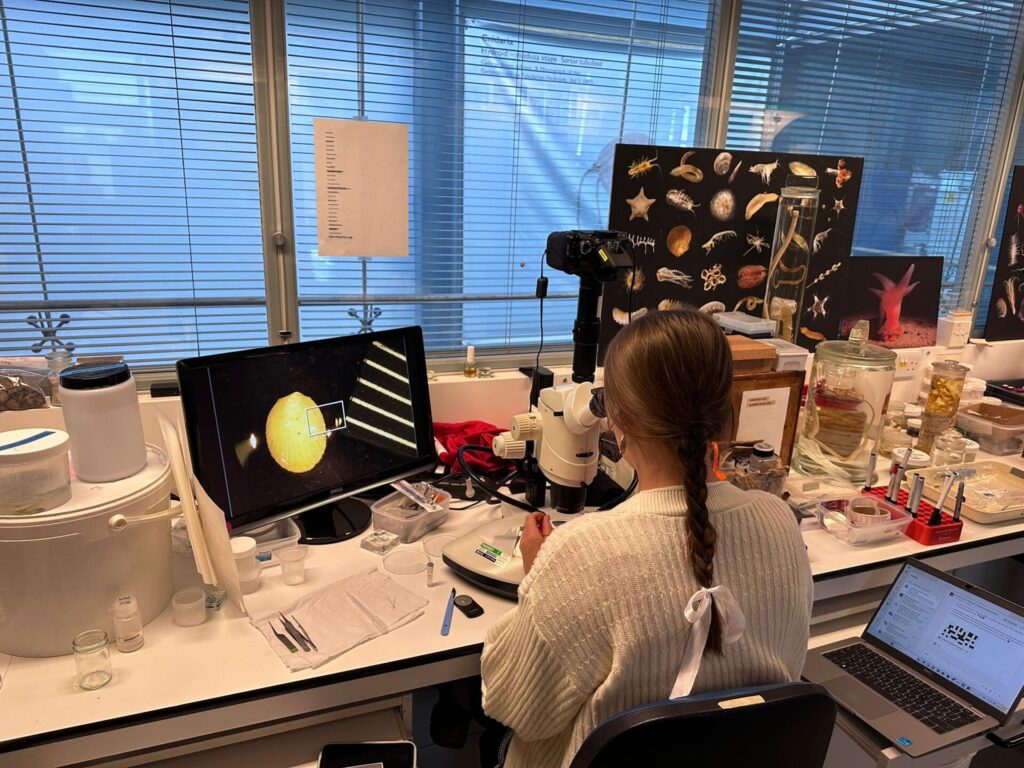
Molecular work at the NHM
Lauren completed a 4-week placement in the Deep-Sea Systematics and Ecology research group at the Natural History Museum, London. She completed DNA barcoding of three genes in over 100 bivalve specimens collected from the abyssal Pacific seafloor.
Photo caption: Tissue Extraction
Erin Raif: Inspirational Training. University of Leeds, Panorama, final year.
First-year PhD students learn LaTeX in new student-designed training
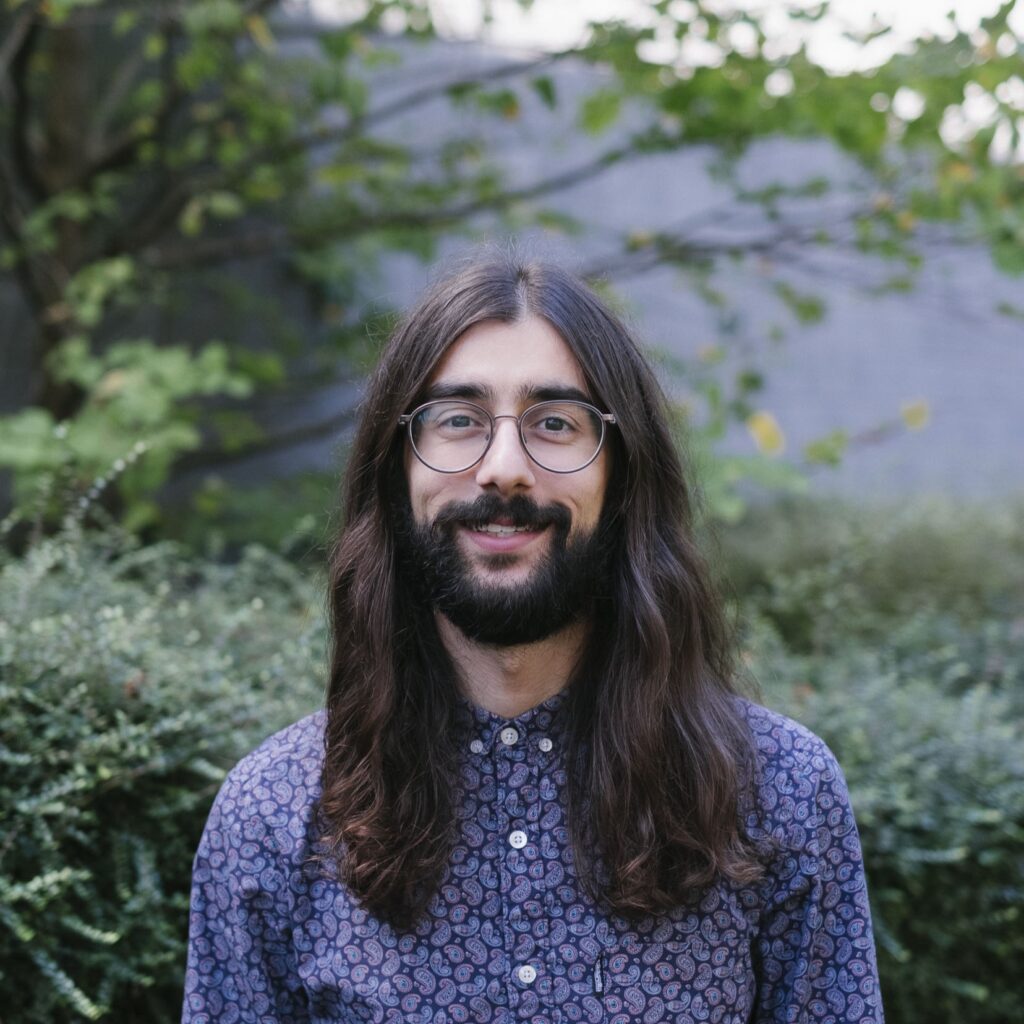
First-year students in the NERC Panorama DTP recently participated in a training workshop on the typesetting software LaTeX, written by final year Panorama PhD student Erin Raif. The 90-minute workshop gave a crash course introduction to LaTeX to 25 students, giving them hands-on exercises to help them gain confidence with a notoriously tricky tool that will help speed up the writing of research papers and theses. Attendees said that the training was “really useful” and “engaging”, and the session has now been added to the training programme for the NERC YES DTN. The future sessions will also give other Panorama and YES students an opportunity to develop their teaching skills, using teaching resources that Erin has developed to aid delivery of the workshop.
Photo caption: Erin Raif, who wrote and delivered the LaTeX training.
Sarena Banu: Achievements. University of Hull, Energy and Environment Institute, Final year (4th year), Project title: Climate change meets life’s crunch point – how do heatwaves affect the basic functions of life?

Sarena Banu wins the 2025 International Dictyostelium Graduate Student Award
I am Sarena Banu, a final-year PhD student at the University of Hull’s Energy and Environment Institute and the Department of Biomedical Sciences. My research explores how extreme environmental stress, such as heatwaves affects early organismal development at the molecular and gene expression level, using the social amoeba Dictyostelium discoideum and zebrafish embryos as model systems. I am happy to share that I was selected as a co-winner of the 2025 International Dictyostelium Graduate Student Award, announced at the Dictyostelium International Conference this August in Germany. It was a fantastic experience to share my climate-change research with the Dicty community and to meet researchers from around the world. This award is given annually to graduate students working with Dictyostelium internationally, so it meant a lot to have my work recognised. I am grateful to NERC YES-DTN / Panorama DTP and the Hull Doctoral College for supporting my conference registration and travel, and I thank my supervisors, Dr Francisco Rivero and Dr Katharina Wollenberg Valero, as well as the Dicty community for their support throughout my PhD.
Photo caption: Heatwave impact on Dictyostelium discoideum (social amoeba) development, pictured in the University of Hull laboratory.
Kelly O’Shea: Understanding the risks to soil microbial communities following the use of microplastic-contaminated digestate in agriculture.

Research/project information
What environmental challenge does your research tackle?
Can soil perform its essential functions if it is contaminated with microplastics? That is the research focus for this PhD. Understanding the impact microplastics are having on agricultural soils, including the microbial communities that drive soil ecosystem processes. This refers to the extent to which soil can convert and store nutrients for plant uptake, the efficiency of decomposition processes, and any changes in soil structure resulting from microplastic introduction. Our fertiliser of choice is a byproduct of the biogas industry and can provide farms with essential nutrients, thereby reducing reliance on synthetic fertilisers. However, we are seeking to determine the impact of this fertiliser type on soil.
- What is one thing you want everyone to know about your project?
The biogas industry can provide green energy in the form of gas to fuel our homes. Many of these plants process food waste from domestic and commercial sources, producing biomethane and a byproduct that can be used as an agricultural fertiliser. This is the circular waste economy that many are striving to achieve. How food reaches plants can cause issues. Plastic packaging can break open, leading to microplastic contamination of the fertiliser, which in turn affects the soil and soil microbial communities.
- What is the strangest or most surprising thing you have encountered during field/lab work?
This is a lab-based PhD, so much time is spent developing methods to extract the maximum amount of plastic whilst not degrading it. This has been a challenge and has required learning chemistry and thermodynamics to determine the appropriate method for each sample tested. So far, we are finding significantly more plastic than was expected.
Photo caption: Kelly in the lab.